A research by online site DS Simon has found that 85% of the media website are now using online videos to cover news instead of the traditional lengthy articles. This is apparently due to the deflating attention spans that the target audiences have. The research has also found that these media sites are actually progressively embedding advertisements on their sites as part of the new media approaches for the convenience of viewing when their online users visit the site. Online medias are trying to improve and push the usage of videos to report their materials as it draws more attention as well as secures the audience better than the traditional word approach.
Lets say if you were reading a news article about a military camp.
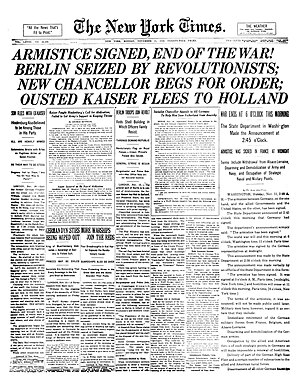
Would newspaper help you visualize better...or
Would a video that shows you a clip (like the above) help you understand better?
The research that has been conducted by DS Simon doesn’t come as a surprise as the alarming growth of online users has grown from 16 million back in 1995 to 2110 million now in 2011, according to the statistics by Internet World Stats (2011). I personally watch a lot of news online despite having the traditional printed newspaper at home due to the time consumption that comes from reading articles one by one. With the news packed in a video, understanding and comprehending comes quick as we are assisted by visuals and sound. Information may also be more effectively conveyed across as compared to print.
Metallinos, N (1996) opines that sound and visuals are very important when it comes to an audience who are recipients of information. Videos can actually expand the involvement of audience into feeling the content and motivate them to think on a deeper level, as opposed to print which focuses on offering information (Billboard 1994).
However, Miller (2008) begs to differ as she opines that interactivity can never be a mass audience approach as each user of the internet is in control of their own choices to view, just like print. Online links are only linked to with headings and can only be accessed when clicked, whereas for print – the reader has to speed and filter through the headlines before deciding on which to read. For print, it ensures some sort of fixation of where the eyes go even if it was just the photos.
Which do YOU think can be more effective in conveying the messages?
REFERENCE
Billboard 1994, ‘Pro Audio’ in ‘Billboard’, online, viewed online on 15th November from http://books.google.com.my/books?id=YQgEAAAAMBAJ&pg=PA85&dq=interactivity+with+video+audience&hl=en&ei=v47CTr-rGsmfmQXsu9C4Cw&sa=X&oi=book_result&ct=result&resnum=7&ved=0CE8Q6AEwBg#v=onepage&q=interactivity%20with%20video%20audience&f=false
Internet World Stats 2011, Internet Growth Statistics, online, viewed 15th November from http://www.internetworldstats.com/emarketing.htm
Metallinos, N 1996, ‘Auditory Perception: Defining the Sound Dimension of Television Pictures’ from Television Aesthetics : Perceptual, Cognitive, and Compositional Bases, Lawrence Erlbaum Pictures, Mahwah
Miller 2008, ‘The User, The Author, and Interactivity’, from ‘Digital Storytelling’, Elinor Actipis, United Kingdom, pp. 56